-01.png)
What Does a Choir Conductor Actually Do?

When you watch a choir perform, your attention naturally goes to the singers. Yet standing in front of them, facing away from the audience, is someone whose movements seem to guide everything happening on stage.
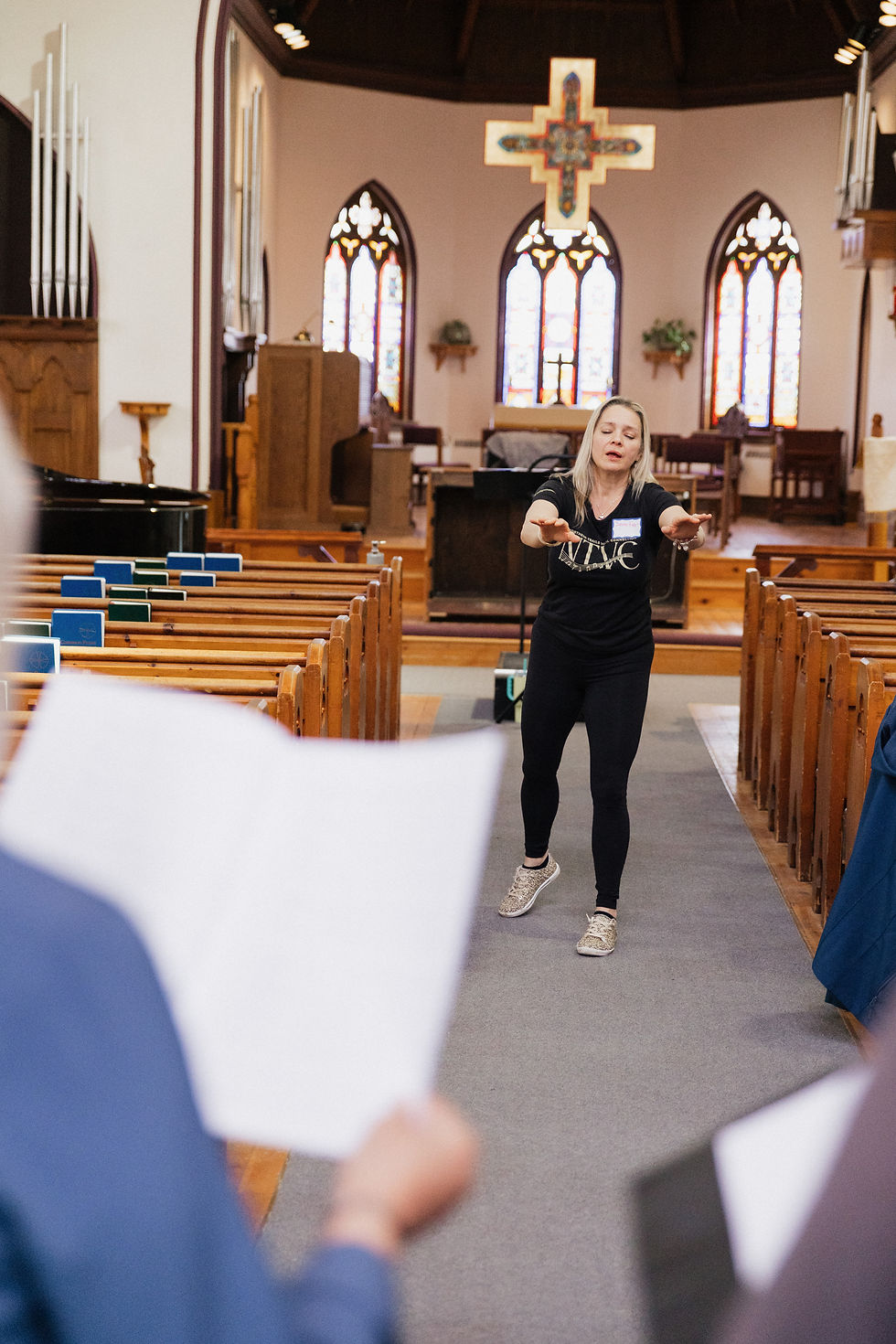
The conductor raises a hand, and dozens of singers breathe together. A small gesture brings the sound down to a whisper. A broader motion helps the music grow until it fills the room.
This often leaves audience members wondering: What does a choir conductor actually do?
It may look as though the conductor is simply keeping time, but that is only a small part of the role. Long before the audience arrives, the conductor has already helped shape nearly every aspect of the performance, from the music that was chosen to the way each phrase will be expressed.

The Conductor’s Work Begins Before Rehearsals
One of a conductor’s first responsibilities is selecting the repertoire. This involves much more than finding songs the choir will enjoy singing.
The conductor must consider the ability and balance of the ensemble, the time available for preparation, the emotional range of the program, and the experience they want to create for the audience. Individual pieces may be beautiful on their own, but a strong concert program should also feel connected.
In developing Northern Trails Vocal Connection’s last concert, Shimmers of Earth, pieces such as A World That Shimmers and The Colour of Earth by Nicholas Ryan Kelly were connected with The Lake Isle and Tundra by Ola Gjeilo and For the Beauty of the Earth by John Rutter.
Each work approaches nature, beauty, reflection, and our relationship with the world from a different perspective. The conductor’s job is to recognize those connections and arrange the music so the concert feels like a complete journey rather than a collection of unrelated songs.
Teaching the Notes Is Only the Beginning
Once rehearsals begin, the choir must learn the correct pitches, rhythms, and words. Those elements are essential, but singing the right notes at the right time is only the foundation of a performance.
A conductor also helps singers understand what the music is communicating. They make decisions about tempo, phrasing, dynamics, diction, pronunciation, breathing, tone, and emotional expression.
Why should one phrase feel warm and expansive while another feels restrained? Why does a particular harmony need tension before it resolves? Which words should be emphasized so the meaning of the text reaches the audience?
These questions are explored throughout the rehearsal process. Over time, singers begin to move beyond their individual parts and understand how their voices fit into the larger musical picture.
Turning Many Voices Into One Ensemble
Every singer brings a unique voice to the choir. Some voices are naturally bright, while others are warm or rich. Singers also breathe, pronounce words, and interpret phrases differently.
If everyone sang entirely according to personal preference, the result would sound like a group of individuals rather than a unified ensemble. The conductor helps those different voices work together without removing the qualities that make them distinctive.
This requires careful attention to balance and blend. The conductor may ask one section to sing more lightly, encourage another to bring out an important harmony, or adjust vowel shapes so the choir creates a more consistent sound.
When this work is successful, the audience no longer hears dozens of separate singers. They hear one expressive instrument made from many voices.
What Is the Conductor Communicating During a Performance?
During a concert, the conductor uses gestures to remind the choir of the musical decisions developed in rehearsal. These movements may indicate tempo and rhythm, but they can also communicate far more subtle information.
A small, controlled gesture may invite a delicate entrance. A broad movement can encourage a fuller, more resonant sound. A lifted hand may ask the choir to sustain a phrase, while a precise motion brings every voice to silence at exactly the same moment.
Facial expressions and eye contact are also important. A glance toward one section may prepare them for an entrance. A change in expression may remind singers of the mood or meaning behind the text.
To the audience, these gestures may appear spontaneous. To the choir, they are part of a shared language developed over weeks or months of rehearsal.

Conductors Listen as Much as They Lead
Although conductors are highly visible, much of their work during a performance involves listening.
They are monitoring the balance between sections, the clarity of the words, the tuning of the harmonies, and the way the sound is responding to the room. Every performance space has different acoustics, so music may behave differently in a concert venue than it did in rehearsal.
A resonant room may cause certain phrases to linger longer than expected. One section may sound more prominent because of where it is standing. The conductor listens for these changes and helps the choir adjust in real time.
This is one reason no two live performances are exactly alike. The choir and conductor must respond to the room, the audience, and one another as the music unfolds.
A Conductor Shapes the Story
Technical accuracy matters, but music is not simply a sequence of correct notes. It is a form of communication.
A conductor helps the choir understand the emotional direction of each piece and of the concert as a whole. Some moments may express joy, gratitude, or wonder. Others may create tension, stillness, longing, or reflection.
The conductor shapes the pacing of these moments so the audience experiences a meaningful progression. Without that larger vision, even beautifully sung music can feel emotionally flat.
In this sense, the conductor is not only a teacher or timekeeper. The conductor is also an interpreter and storyteller.
Why Does a Choir Need a Conductor?
An experienced choir may be able to sing familiar music without someone standing in front of it. That does not mean the conductor is unnecessary.
A conductor provides a shared musical vision. They help singers agree on how the music should move, where it should breathe, what it should emphasize, and what it should communicate.
Without that guidance, singers may produce the correct notes but interpret them in slightly different ways. Those small differences can affect timing, balance, clarity, and emotional impact.
The conductor brings those interpretations together so the choir can communicate with one voice.
When the Conductor’s Work Becomes Invisible
When a choir performs well, the result can appear effortless. Entrances happen together, harmonies remain balanced, phrases rise and fall naturally, and the entire ensemble seems to breathe as one.
That apparent ease is the result of careful planning, detailed rehearsal, active listening, and trust between the conductor and the singers.
The conductor is not standing at the front because the choir would be incapable of making sound without direction. The conductor is there to help many skilled individuals create something more unified, expressive, and meaningful than any one singer could create alone.
When that happens, the audience may eventually stop thinking about what the conductor is doing.
They simply become absorbed in the music.


Comments